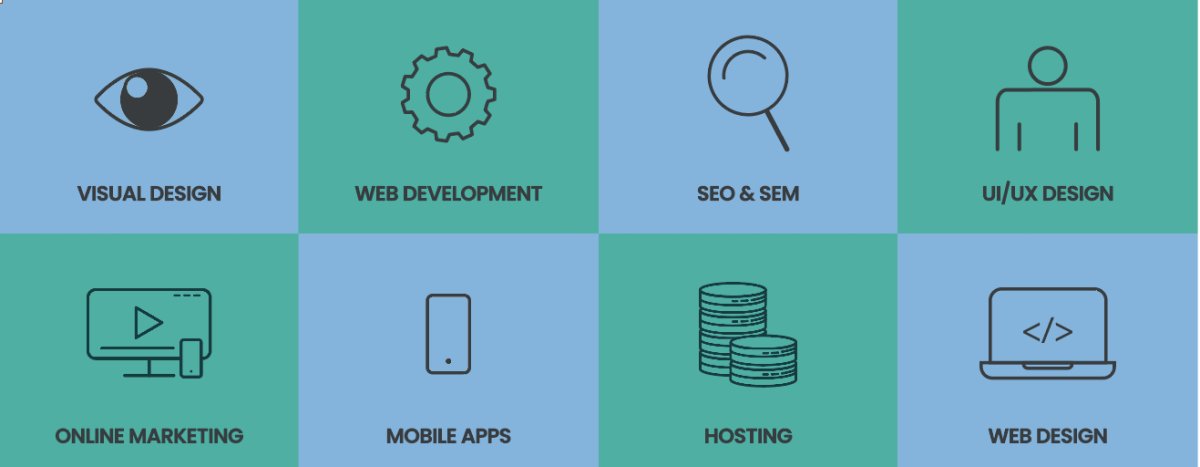
Why choose a full service design agency in Devon instead of using multiple suppliers?
18/03/2026
Many businesses end up with branding in one place, a website somewhere else, and digital marketing handled by a third supplier.
On paper, that can seem manageable. In practice, it often creates friction.
The website does not quite reflect the brand. The messaging feels inconsistent. SEO is treated as a bolt-on. Campaigns go live without clear alignment to the wider identity of the business. Over time, the result is a brand that feels fragmented rather than joined up.
That is why a full service design agency can be valuable.
A joined-up approach helps connect strategy, design, web development and digital thinking so that each part supports the others. Instead of managing separate creative streams, businesses can work from a clearer foundation and a more consistent direction.
If you are reviewing your brand, website or digital presence, it is often worth asking whether the issue is not the quality of individual outputs, but the lack of integration between them.
You can see how this thinking connects across our own branding services, web design, graphic design and digital marketing support.
What a full service design agency actually does
A full service design agency should do more than offer multiple services from the same building.
The real value comes from how those services work together.
That may include:
- brand strategy and identity
- graphic design for print and digital
- website design and development
- content structure and messaging
- digital marketing support
- ongoing creative development
The point is not simply convenience. It is consistency, alignment and better decision-making.
A business should not have one tone of voice on its website, another in its brochures and another in its digital campaigns. Nor should a website be designed in a way that ignores brand clarity, search visibility or user experience. A joined-up agency helps reduce that disconnect.
Why businesses move away from multiple suppliers
Working with several specialist suppliers can make sense in some situations. But it often comes with hidden costs.
Different teams may interpret the brand differently. Projects can slow down because communication has to pass through multiple parties. Website decisions may not support marketing goals. Marketing activity may not reflect the strengths of the wider brand.
Over time, that fragmentation can make a business look less clear and less confident than it really is.
A more integrated model gives you:
- a stronger strategic thread
- clearer accountability
- fewer gaps between design and delivery
- more consistency across channels
- less internal admin
That does not automatically make every decision easier, but it usually makes the overall direction easier to manage.
Why integration improves creative and commercial outcomes
When strategy, brand, website and marketing are considered together, the work tends to become more coherent.
A website is easier to plan when the positioning is clear. Content is easier to write when the tone of voice is defined. Marketing becomes stronger when it is built on a clearer brand foundation. Design becomes more useful when it reflects business goals rather than existing as decoration.
This is one reason strategic design has commercial value. The Design Council has published evidence from its Designing Demand programme showing that for every £1 businesses invested in design, they could expect over £20 in increased revenues, alongside gains in profit and exports. That does not mean every design project should be reduced to a simple financial formula, but it does support the broader point that design is most valuable when approached strategically.
How we approach integrated design at D2 Creative
At D2 Creative, we use our E.D.G.E principle to keep creative projects clear and commercially grounded.
Explore
We start by understanding the business, audience, market and current challenges. This may include brand review, website audit, competitor analysis and stakeholder conversations.
Define
Next, we shape the direction. We agree what the work needs to achieve, what the business should be communicating more clearly and how the different parts of the project need to connect.
Generate
This is where ideas take shape. Depending on the brief, that may include branding, website design, graphic assets, messaging systems, campaign materials or digital content.
Evaluate
Finally, we review the work against the original objective. Does it communicate clearly? Does it feel joined up? Is it improving consistency and supporting the wider direction of the business?
This process helps reduce guesswork and gives projects more structure from the start.
You can read more about this thinking in our process or explore how it plays out in recent work.
Why brand, web and digital should not be separate conversations
One of the biggest weaknesses in many creative projects is that each part is handled in isolation.
A business may commission branding first, then build a website later, then think about SEO afterwards, then add digital marketing on top. None of those steps are wrong on their own, but when they happen without a shared framework the results can become inconsistent.
A better approach is to connect them early.
For example:
- brand strategy helps shape website messaging
- website structure supports SEO
- graphic design improves consistency across print and digital
- digital marketing works better when built on a clear proposition
- ongoing creative support helps keep everything aligned
Google’s guidance continues to emphasise helpful, reliable, people-first content and the importance of using the words people search for in prominent places such as titles, headings and link text. It also recommends making internal links crawlable and descriptive. That is easier to do when the website, content and brand structure are being considered together rather than treated as separate jobs.
The role of websites in an integrated approach
A website should not sit in the middle of your business like a disconnected island.
It should reflect the brand properly, support search visibility, make services easy to understand and create a clear route for people to take the next step. That is hard to achieve if the web build is disconnected from the branding and messaging.
This is why web design works best when it is part of a wider creative conversation.
Related pages:
Why local partnership still matters
For Devon businesses, there is also a practical advantage in working with a local partner who understands the region and can collaborate more directly.
That does not mean national or remote agencies are never the right fit. But face-to-face workshops, clearer communication and a shared understanding of the local context can help shape stronger outcomes, especially when positioning, audience and tone matter.
A local full service agency can also help balance regional identity with wider ambitions, whether that means speaking credibly to local audiences or building a platform that supports broader growth.
This collaboration can also extend to specialist creative suppliers. Professional photography, for example, is crucial for authentic branding, and local businesses can explore PHOTO SHOOTS options to ensure their website and marketing materials truly capture their identity.
What to look for in a full service design agency
If you are comparing agencies, a few questions are worth asking:
- how do you connect branding, web and marketing work?
- how do you begin a project?
- how do you define success?
- who is responsible for strategy?
- what happens after launch?
- how do you keep the brand consistent over time?
A good agency should be able to explain not just what it makes, but how it thinks.
It should also be able to show that the services are genuinely integrated rather than simply grouped together on a page.
Final thought
A full service design agency in Devon should do more than offer a menu of services.
The real value comes from integration. When brand, design, website and digital thinking are aligned, businesses usually gain a clearer identity, a stronger website, more consistent communications and a better foundation for growth.
At D2 Creative, we use our E.D.G.E principle to bring those parts together and create work that is both well crafted and commercially grounded.
If you are managing separate suppliers and feel that your brand or digital presence has become fragmented, it may be time for a more joined-up approach.
D2 Creative helps Devon businesses connect brand, design, web and digital strategy through a clearer, more integrated creative process